The small Church of Saint Pantaléon
Cultural and historical site
10 min
Information
It looks like a small cemetery chapel, yet it's the parish church. But it's the right size for its village, which is also quite small. We're in the wine-growing plain south of Gordes.
No reproduction is permitted without the written consent of the author. (id8503)
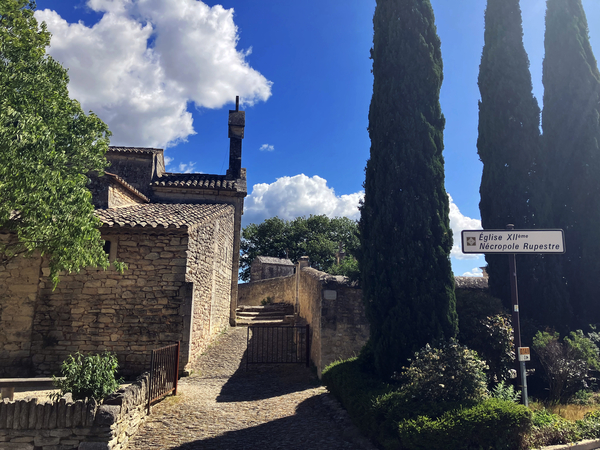
The Church of St. Pantaleon
There is no public transport to easily reach the church.
No reproduction is permitted without the written consent of the author. (id8532)
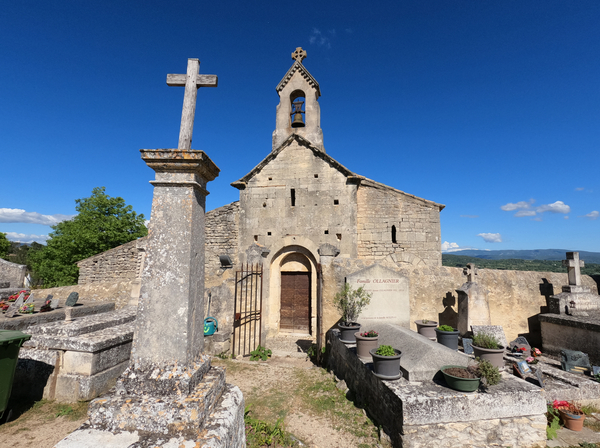
Church of St. Pantaleon seen from the cemetery
SSaint-Pantaléon is located between Cavaillon to the west and Apt to the east, in the plain north of the Luberon. Exit the busy D900 road at Beaumettes and follow the signs towards Gordes, then at the roundabout, continue towards Saint-Pantaléon. Enter the village from the west on the D148. Proceed to the church, parking is also available along this road.

The cornice is adorned with a frieze of acanthus leaves
The oldest part of the church dates back to the 9th century, although almost no trace of it remains in the current nave. The relics of Saint Pantaleon were transported along the Via Domitia around 850 or 860 from Italy to Lyon. The village was situated on this thoroughfare.
No reproduction is permitted without the written consent of the author. (id8533)
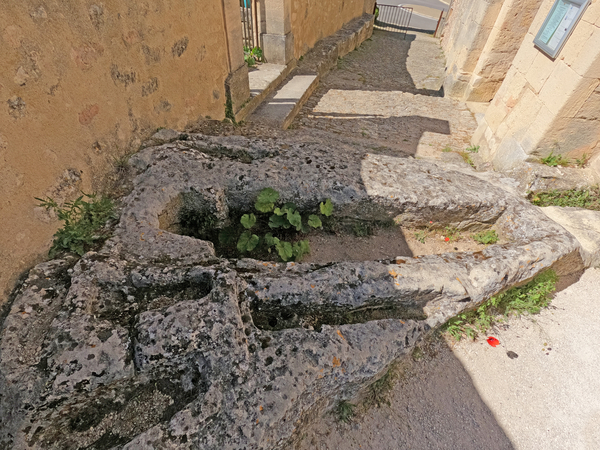
Rock-cut tombs at St. Pantaleon
In the 9th century, the small church was enlarged, first with the addition of a second church built to the south. They remained separate until the 12th century when the wall between them was breached to create a single building.
In 1722, the north transept arm was added to create a space for the baptismal font. This section was further enlarged until the 19th century to form a third nave and the bell tower.
No reproduction is permitted without the written consent of the author. (id8534)
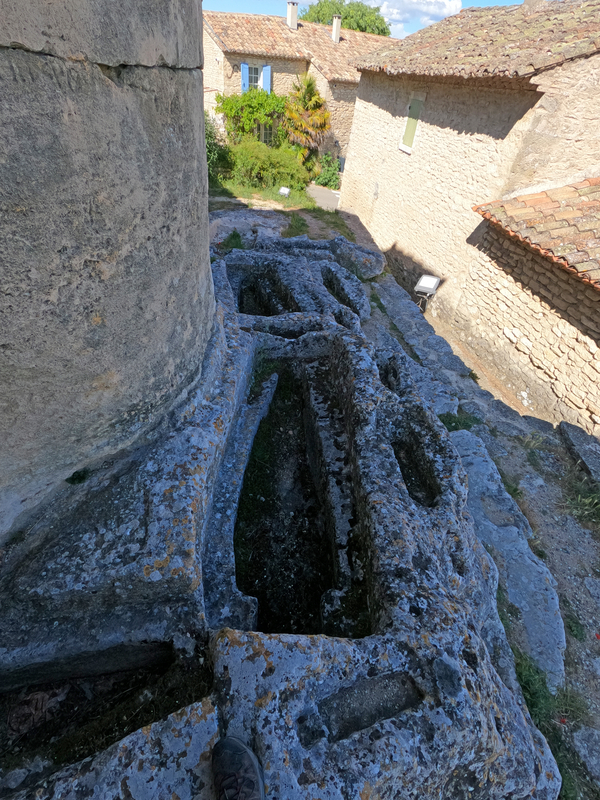
Rock-cut tombs at St. Pantaleon
San Pantali (in Provençal) was a martyr, patron of doctors.
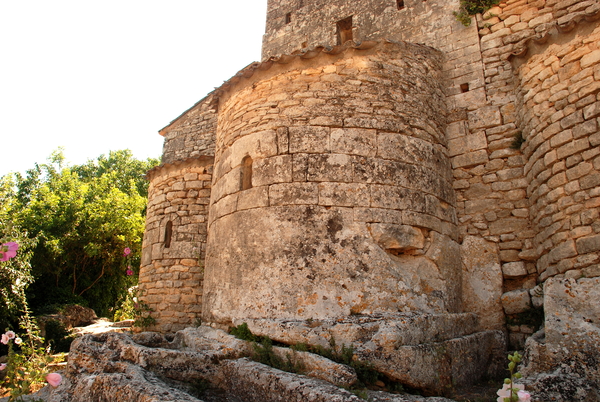
The triple apse
The apse of the original church is partially hewn from the bedrock. An inscription is carved on this section. The text reads:
HIC REQUIESCIT BONE MEMORIE LECTO + OBIIT IN CHR(ist)O
FUIT DEFUNTUS XIII K(a)L(endas) IAN(uarias)"
The translation:
Here lies Lecto of blessed memory. He died in Christ (as a Christian). He died on the third day before the Kalends of January (December 20).
This inscription allows us to date the place of worship to the 6th century. However, it should be noted that the base of the church dates from the 9th century and the oldest rock-cut tombs from the 11th century.
No reproduction is permitted without the written consent of the author. (id8535)
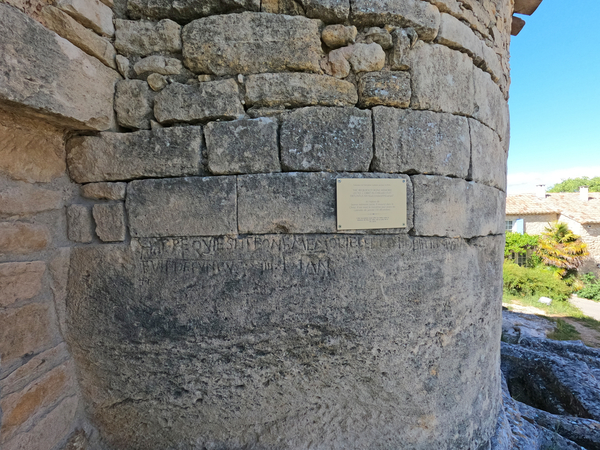
6th-century inscription on the Church of St. Pantaleon
No reproduction is permitted without the written consent of the author. (id8517)
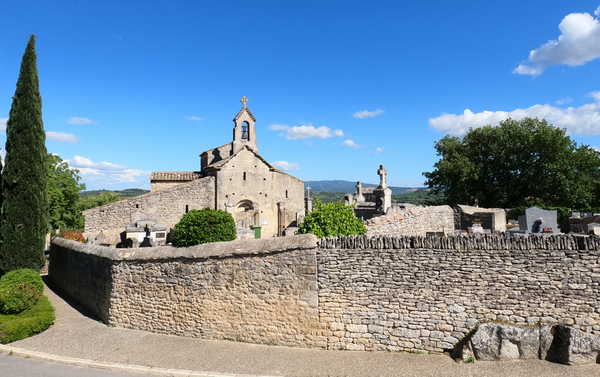
The Church of St. Pantaleon and its cemetery